Texas Wildbuds
Tillandsia recurvata
(Ball Moss)
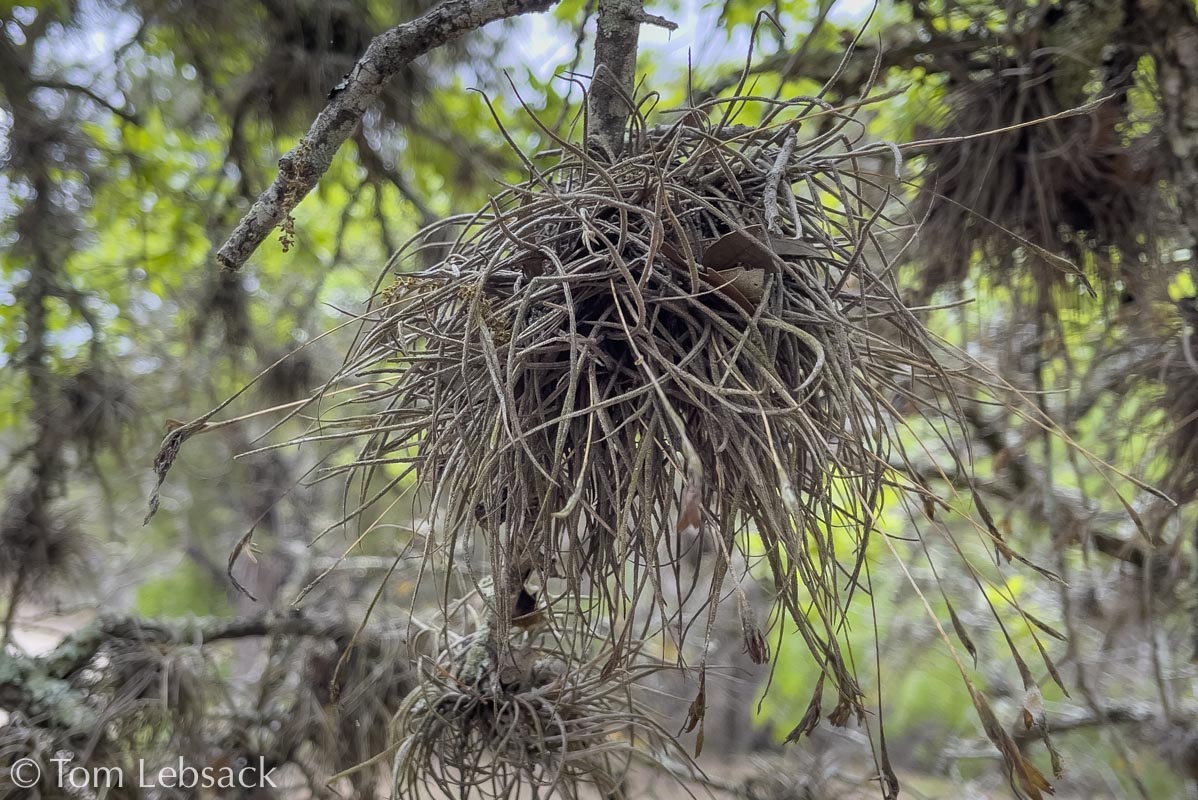
Tillandsia recurvata
Pedernales Falls State Park, Blanco Co. 1597
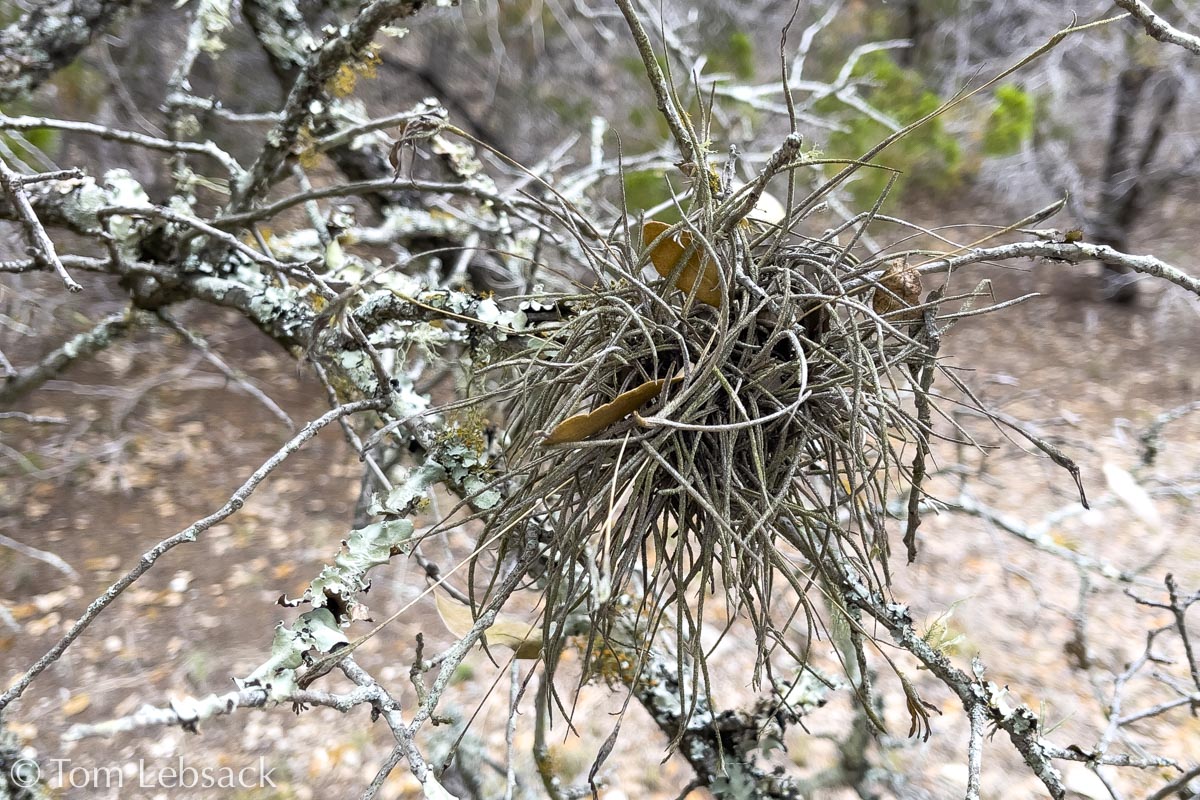
Tillandsia recurvata
Pedernales Falls State Park, Blanco Co. 1601

Tillandsia recurvata
Pedernales Falls State Park, Blanco Co. 1598
| Scientific Name | Tillandsia recurvata | USDA PLANTS Symbol | TIRE |
| Common Name | Ball Moss, Small Ball Moss | ITIS Taxonomic Serial No. | 42369 |
| Family | Bromeliaceae (Bromeliad) | SEINet Reference |
Click Here |
| Description | Habitat: Shady, humid deciduous woodlands; common on branches of trees, especially Live Oak, sometimes on posts and wires. Plant: Perennial, ball-shaped epiphyte up to 6 inches across that is formed as a gray, flexible, tangle of several to many plantlets or "pups"; short stems are hidden beneath leaves. Leaves: Each plantlet with 4 to 10 narrow, grayish green leaves 2-3/8 to 4-3/4 inches long with pointed tips that curve outward (recurved) from the center of the ball; surfaces covered with specialized trichomes (~hairs). Inflorescence: Erect, conspicuously extending beyond the leaves with 1 or 2 small flowers with tubular corollas about 3/8-inch long; violet petals spreading toward apex; stamens and stigma are included within the corolla. Blooming Period: April to September. References: "Shinners & Mahler’s Flora of North Central Texas" by Diggs, Lipscomb and O’Kennon, LSU Ag Center, Vascular Plants of Williamson County by A.C. Gibson, Wikipedia and SEINet. Note: Tillandsia recurvata is not a moss; it is an epiphyte, a vascular plant, that attaches to tree bark but does not root into the tree or take nutrients or water from it, instead making its own food and getting the water it needs from the atmosphere. |
BONAP Distribution Map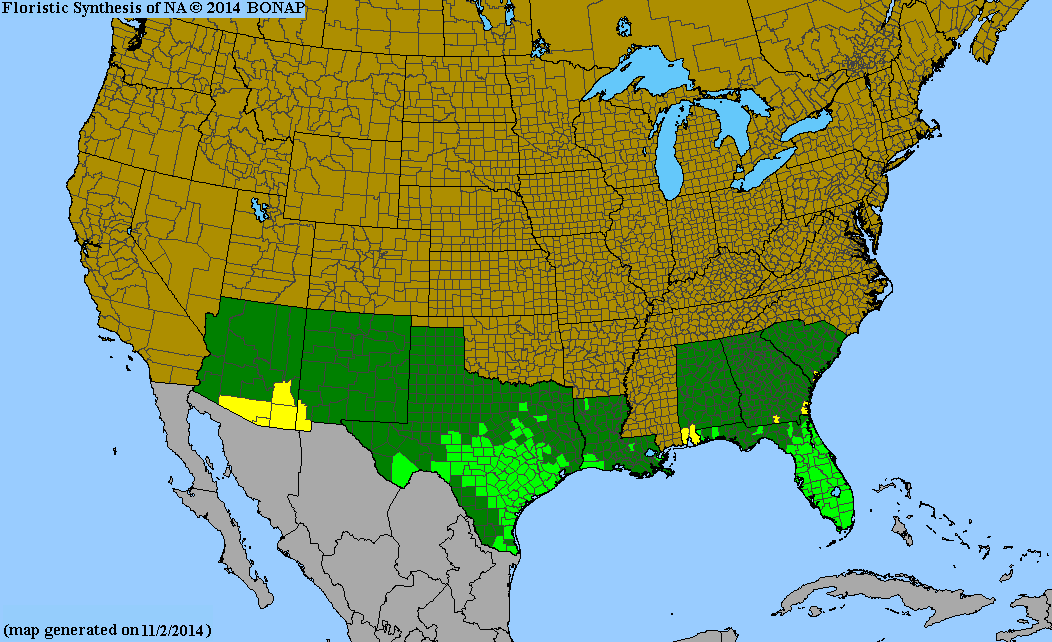 Map Color Key Map Color Key |
Texas Status: Native |
Banner photo of Castilleja indivisa and Lupinus ssp. taken along FM 1323 north of Johnson City, Blanco County
© Tom Lebsack 2026
Every attempt is made to provide accurate, up-to-date, and relevant information, but the completeness or accuracy of any information presented on this website cannot be guaranteed. I use authoritative references to insure high standards of accuracy and review and update the information frequently. Please contact me if you find errors.