Texas Wildbuds
Parkinsonia texana
(Texas Paloverde)
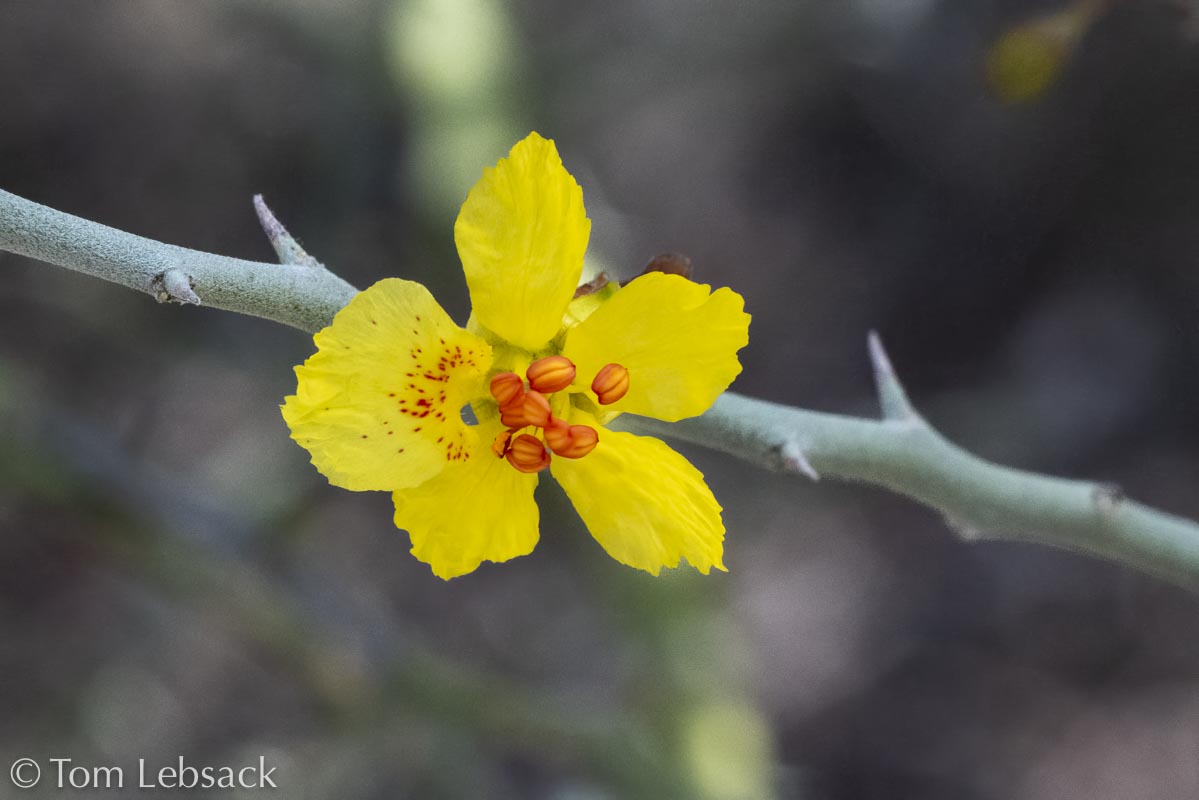
Parkinsonia texana, Falcon State Park, Starr Co. 4154
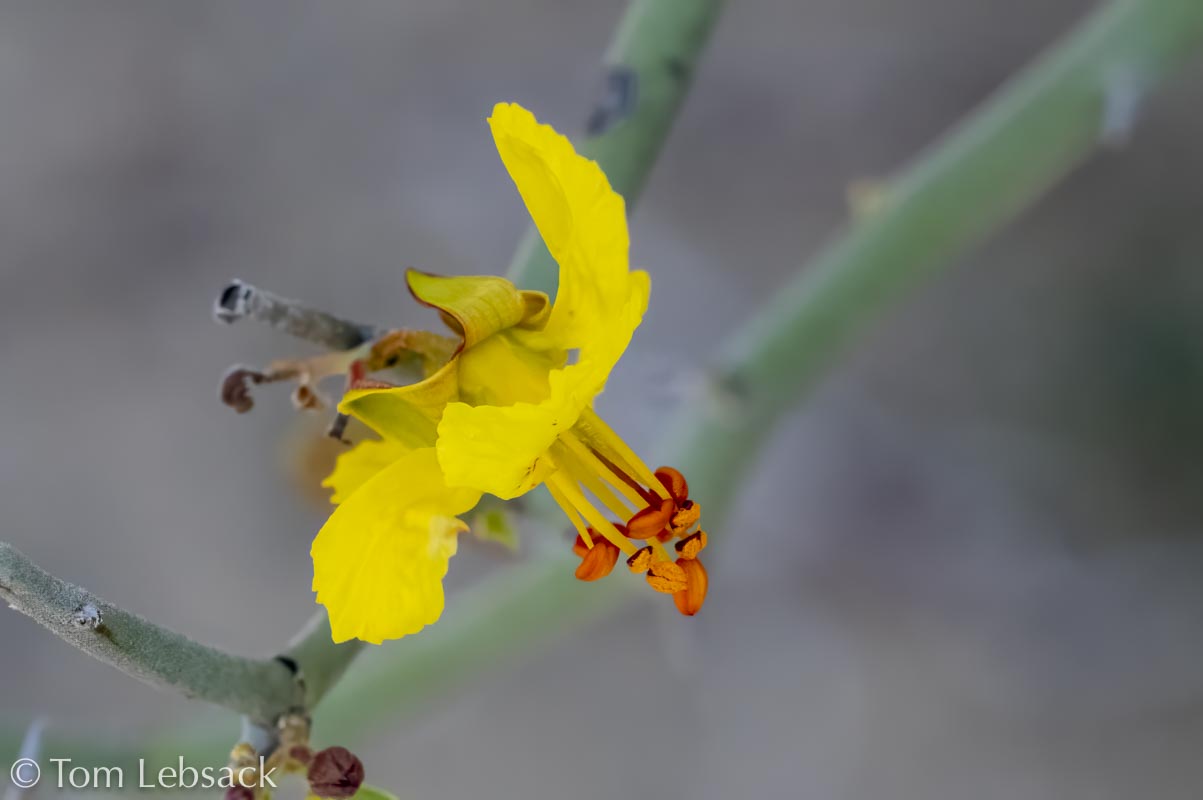
Parkinsonia texana, Falcon State Park, Starr Co. 4152
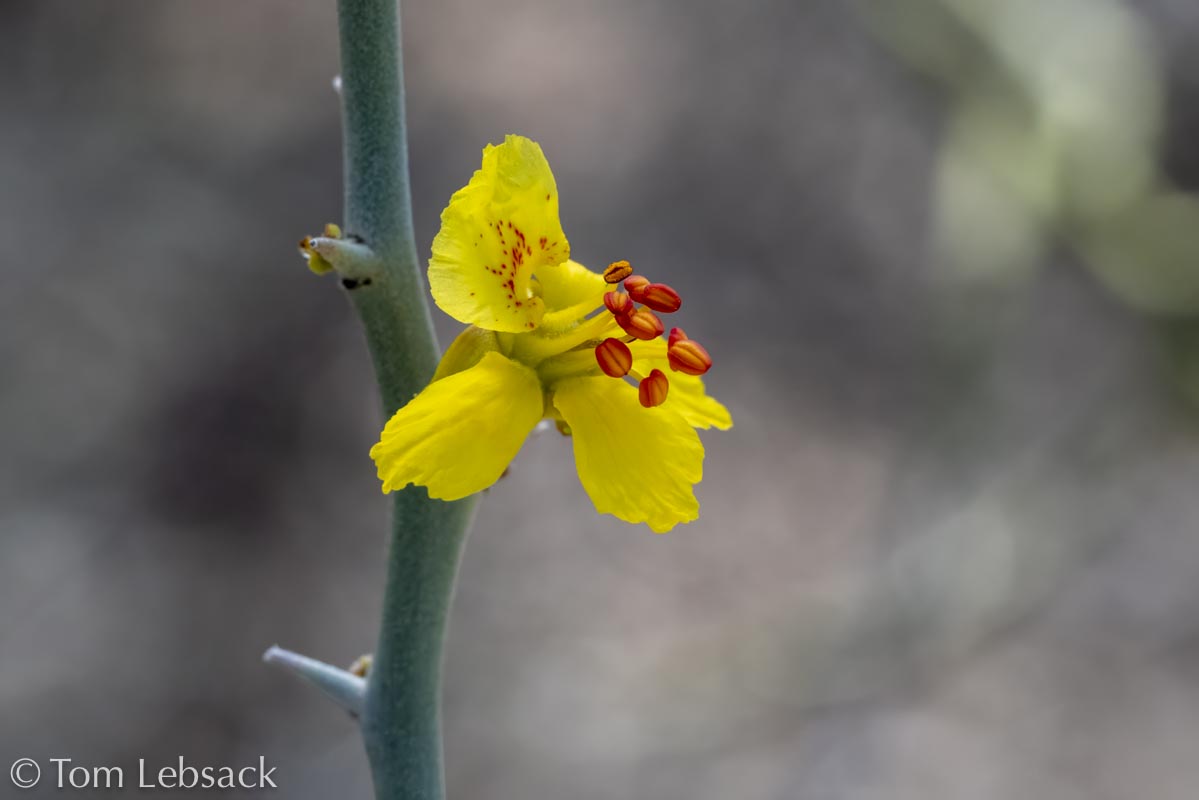
Parkinsonia texana, Falcon State Park, Starr Co. 4162
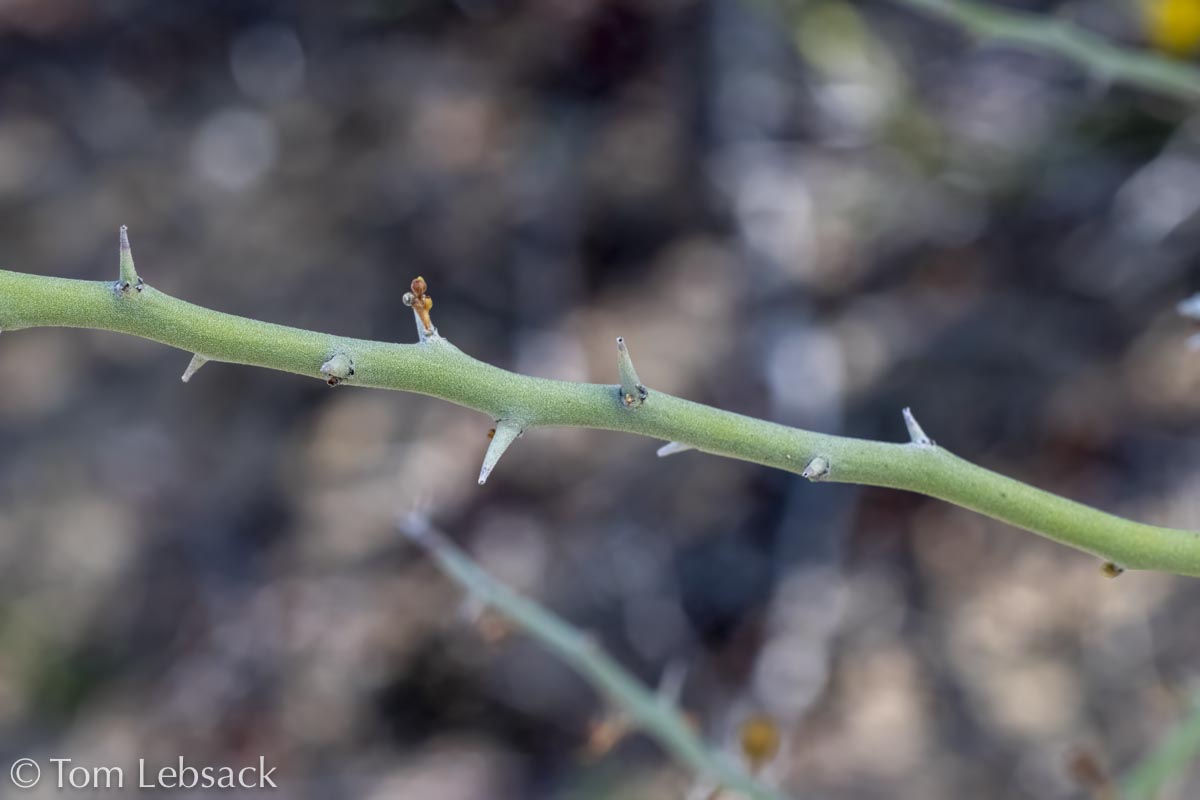
Parkinsonia texana, Falcon State Park, Starr Co. 4159

Parkinsonia texana, Falcon State Park, Starr Co. 6151
| Scientific Name | Parkinsonia texana (Cercidium texanum) | USDA PLANTS Symbol | PATE10 |
| Common Name | Texas Paloverde, Border Paloverde | ITIS Taxonomic Serial No. | 26829 |
| Family | Fabaceae (Pea) | SEINet Reference |
Click Here |
| Description | Habitat: Dry, gravelly, clay loam or sandy soils; semidesert scrub. Plant: Shrubs 4 to 10 ft. tall, often several-stemmed from the base; much-branched; branches are green, with pubescent hairs and short (less than 1/4-inch long), nearly straight spines at leaf nodes; sprays of many yellow flowers. Leaves: Alternate and twice-pinnately compound, leaves with usually just one pair of pinnae 3/8 to 1-1/4 inches long, each pinnae having 2 to 6 opposite leaflets that are oblanceolate to obovate, about 1/8-inch long and pale green. See Note below. Inflorescence: Many short racemes 3/8 to 1-1/4 inches long arising from leaf axils of bright yellow flowers (sometimes appearing solitary) each 3/8 to 5/8-inch across; 5 light to deep yellow unequal petals, front-most one (the banner) slightly larger and often orange-spotted near its base; 10 protruding stamens with dark orange anthers. Bloom Period: Spring and Sunmmer. Fruit: Flat, dark brown legume pod 1 to 2 inches long. References: Flora of North America and Plants of Texas Rangelands; Cercidium texanum in "Manual of the Vascular Plants of Texas" by Correll and Johnston and “Trees and Shrubs of the Trans-Pecos and Adjacent Areas” by A. Michael Powell. Note: The plant may appear leafless at first glance because of the small leaflets, and it often drops them in summer or when very dry, re-leafing after rain; the green bark carries out photosynthesis whether the leaflets are present or not. |
BONAP Distribution Map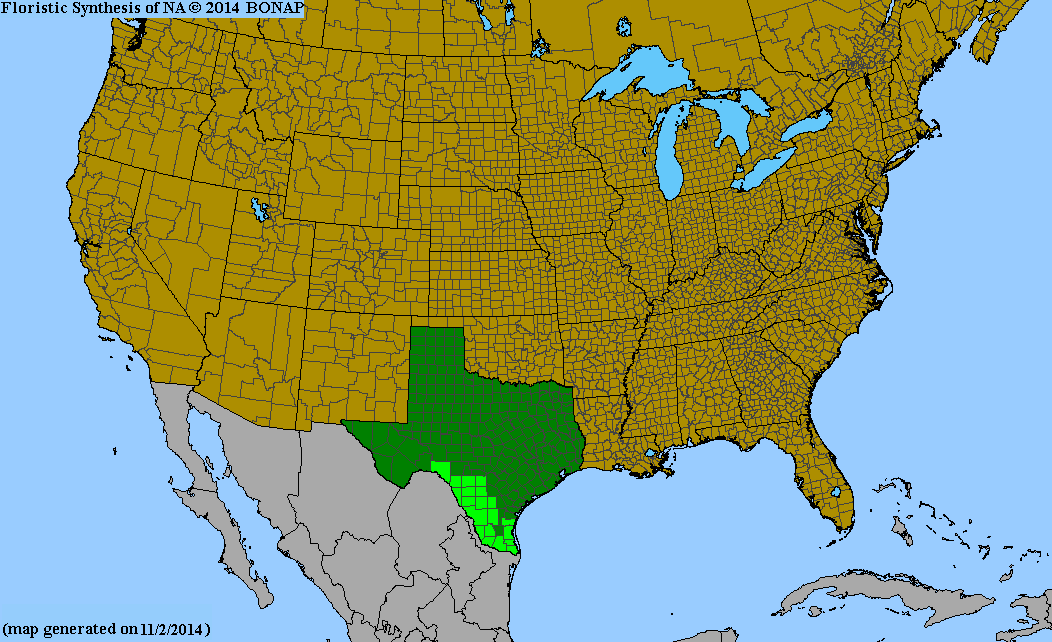 Map Color Key Map Color Key |
Texas Status: Native |
Banner photo of Castilleja indivisa and Lupinus ssp. taken along FM 1323 north of Johnson City, Blanco County
© Tom Lebsack 2026
Every attempt is made to provide accurate, up-to-date, and relevant information, but the completeness or accuracy of any information presented on this website cannot be guaranteed. I use authoritative references to insure high standards of accuracy and review and update the information frequently. Please contact me if you find errors.