Texas Wildbuds
Croton argenteus
(Silver July Croton)
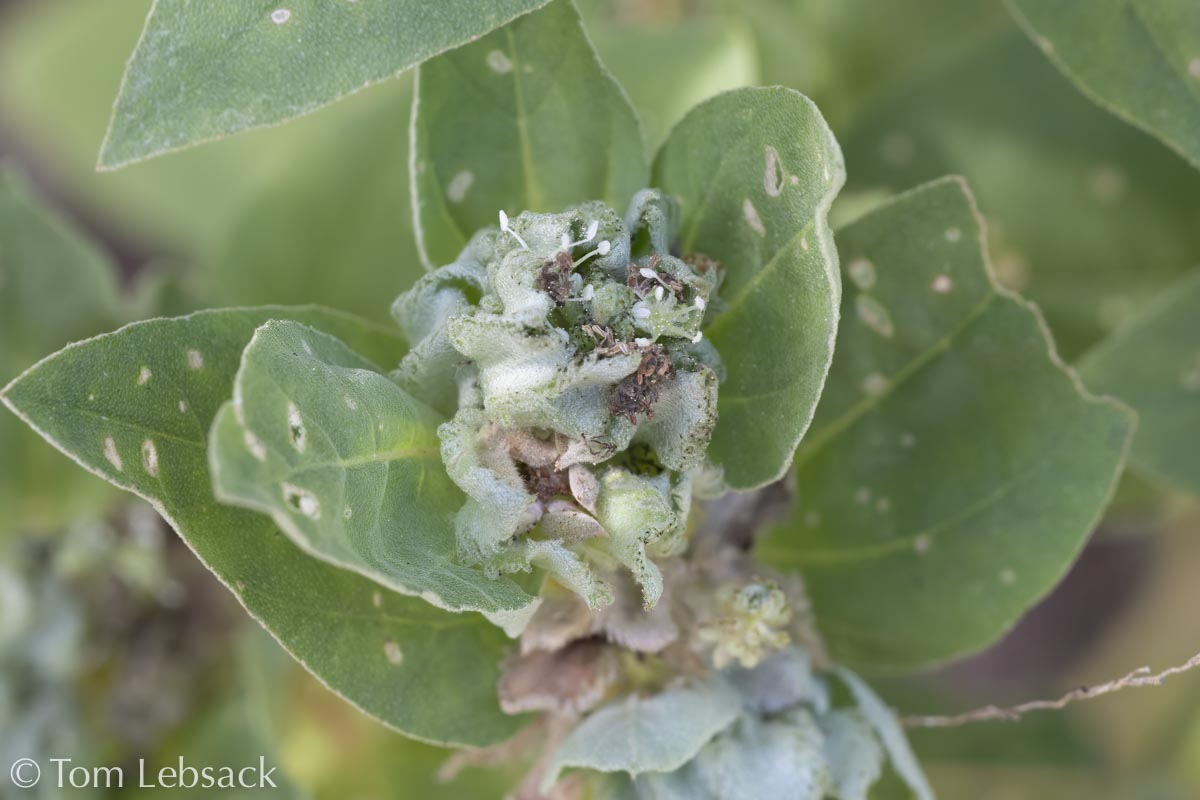
Croton argenteus, Resaca de la Palma State Park, Brownsville, Cameron Co. 2973
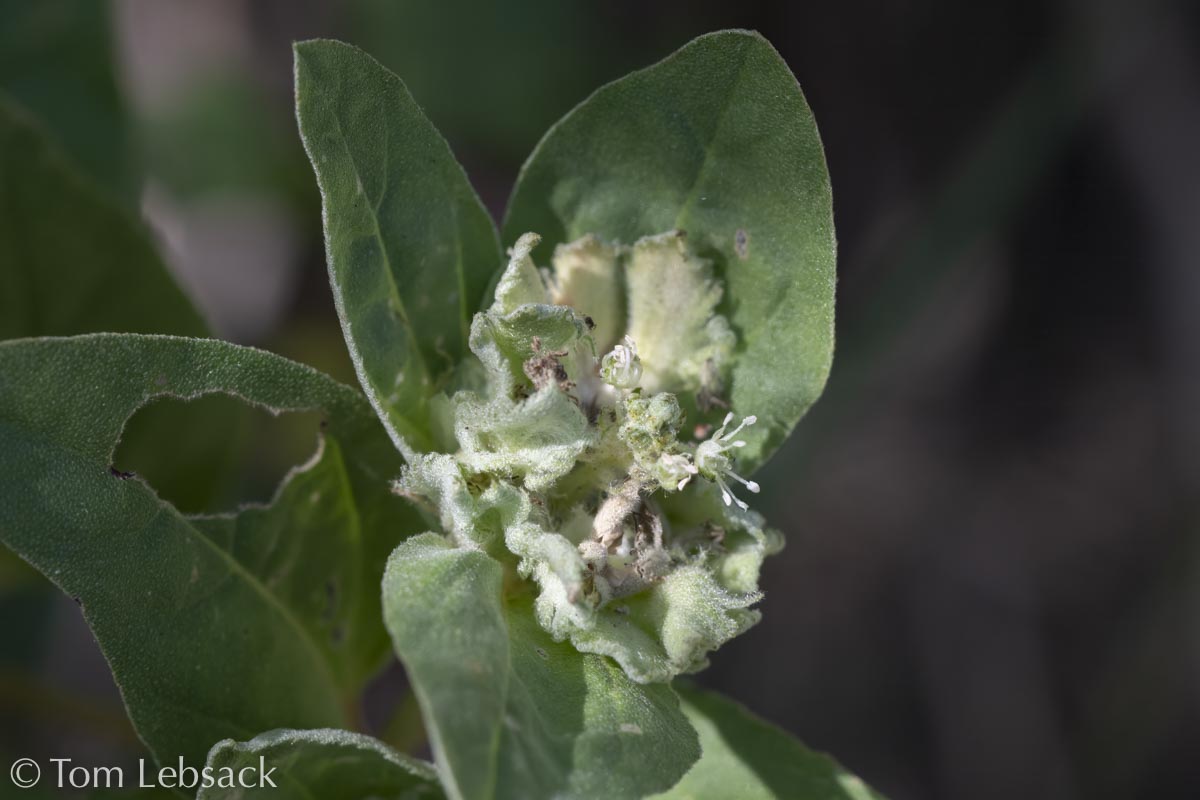
Croton argenteus, Resaca de la Palma State Park, Brownsville, Cameron Co. 2971
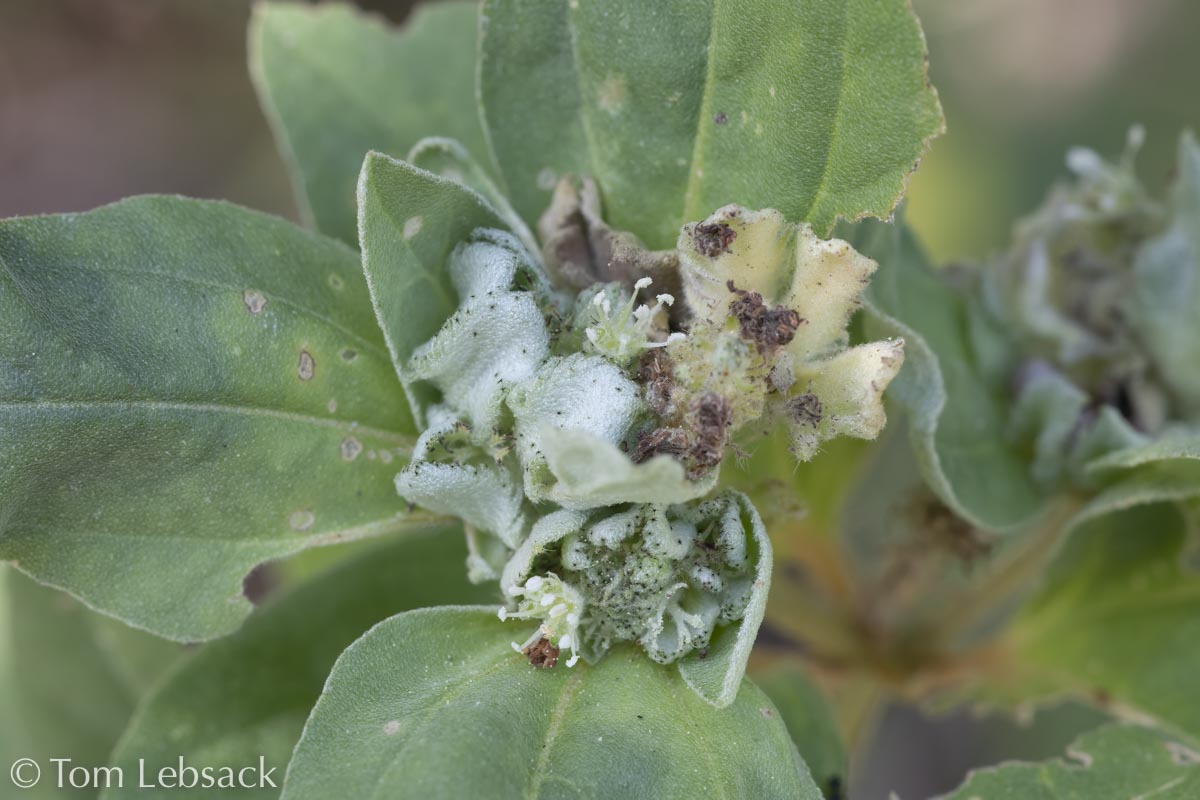
Croton argenteus, Resaca de la Palma State Park, Brownsville, Cameron Co. 2967
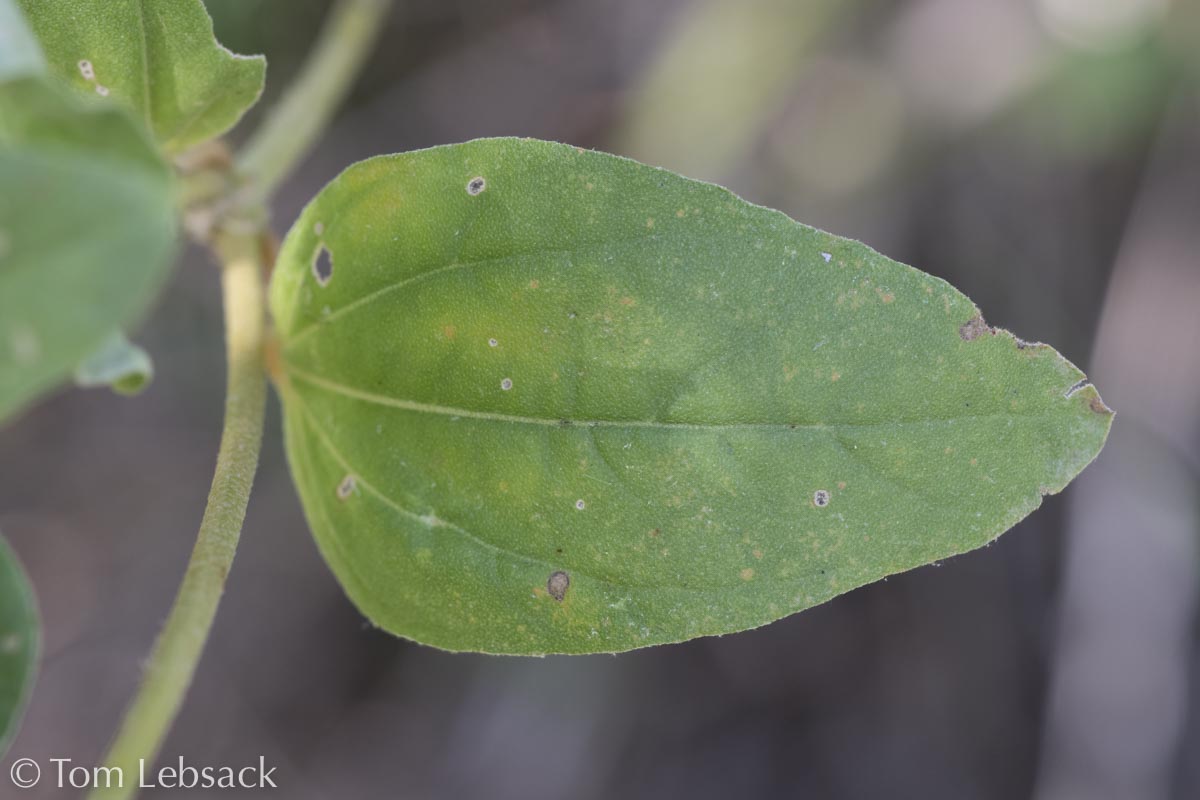
Croton argenteus, Resaca de la Palma State Park, Brownsville, Cameron Co. 2977
| Scientific Name | Croton argenteus (Julocroton argenteus) | USDA PLANTS Symbol | CRAR5 |
| Common Name | Silver July Croton | ITIS Taxonomic Serial No. | 501813 |
| Family | Euphorbiaceae (Spurge) | SEINet Reference |
Click Here |
| Description | Habitat: Loamy soils in disturbed sites, waste areas, levees. Plant: Much-branched annual, 12 to 28 inches tall from a taproot; stems, leaves, and buds are densely stellate (star-like) hairy. Leaves: Blades are ovate to rhombic-ovate with a rounded base 3/4 to 2-3/4 inches long and half as wide; margins are usually finely serrate; the tips are obtuse to rounded to slightly acute; both surfaces are green and stellate-hairy and with 3 to 5 veins from base; leaves sometimes clustered near inflorescences. Inflorescence: Small blossoms clustered in short, bisexual, terminal racemes 3/4 to 1-1/2 inches long with 4 to 10 staminate (male) flowers and 3 to 6 pistillate (female) flowers; each staminate flower on a short (2 to 3 mm) pedicel with 5 short (~2 mm) sepals and petals and 10 to 13 stamens; each pistillate flower with 5 very unequal sepals and no petals. Fruit: Nearly round capsule with pubescent hairs, about 0.2-inch diameter. Bloom Period: June to December. References: "Manual of the Vascular Plants of Texas" by Correll and Johnston, Flora of North America and Invesa.com. |
BONAP Distribution Map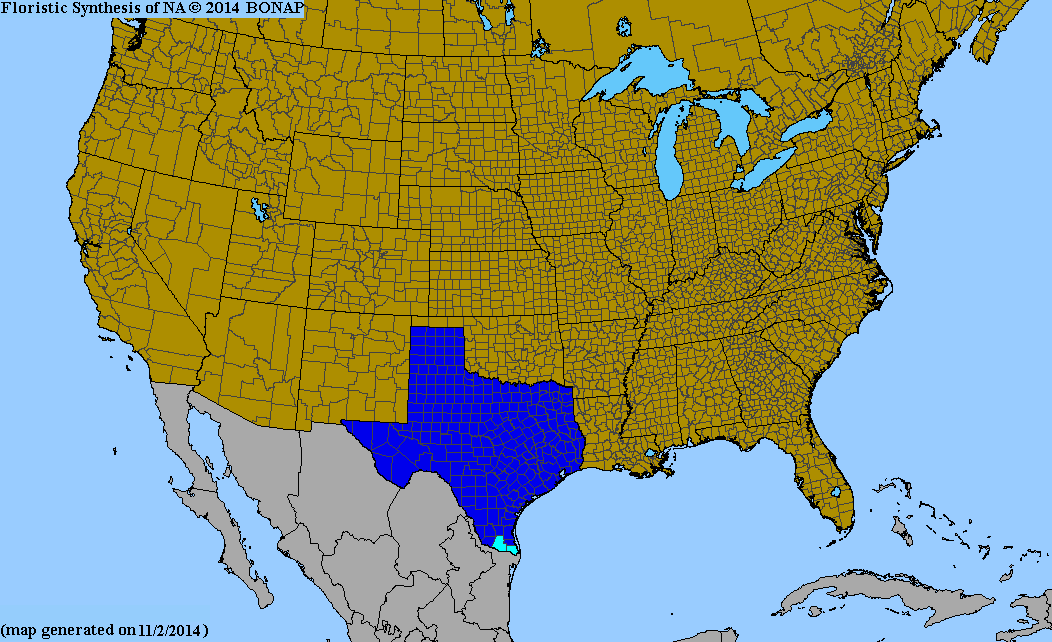 Map Color Key |
Texas Status: Introduced |
Banner photo of Castilleja indivisa and Lupinus ssp. taken along FM 1323 north of Johnson City, Blanco County
© Tom Lebsack 2026
Every attempt is made to provide accurate, up-to-date, and relevant information, but the completeness or accuracy of any information presented on this website cannot be guaranteed. I use authoritative references to insure high standards of accuracy and review and update the information frequently. Please contact me if you find errors.