Texas Wildbuds
Bothriochloa barbinodis
(Cane Bluestem)

Bothriochloa barbinodis, Laguna Meadows Trail, Chisos Basin, Big Bend National Park 5582
| Scientific Name | Bothriochloa barbinodis | USDA PLANTS Symbol | BOBA3 |
| Common Name | Cane Bluestem, Cane Beardgrass | ITIS Taxonomic Serial No. | 41483 |
| Family | Poaceae (Grass) | SEINet Reference |
Click Here |
| Description | Habitat: Dry, rocky, loose limestone or sandy soils in desert grasslands, open range lands and roadsides; 1,000-6,000 ft. Plant: Perennial tufted grass 2 to 4 ft. tall growing in small groups or singly; culms (stems) geniculate (bent upwards) at base and erect above, often branched at maturity; usually with dense tufts of long, white hairs at nodes, at ligules and on the inflorescences. Foliage: Leaves mostly on the stems; narrow, usually flat alternate leaves, blades 8 to 12 inches long and less than 1/8 to 1/4-inch wide; drying reddish-brown. Inflorescence: Dense panicles on the larger shoots emerging from the sheaths, cottony and white or silvery, 2 to 5-1/2 inches long, oblong to somewhat fan-shaped with numerous branches; spikelets in pairs; glumes equal size but different shapes, lower glumes with or without a pit on the back. Bloom Period: August and September. References: "Manual of the Vascular Plants of Texas" by Correll and Johnston, SEINet and Plants of the Texas Rangelands. |
BONAP Distribution Map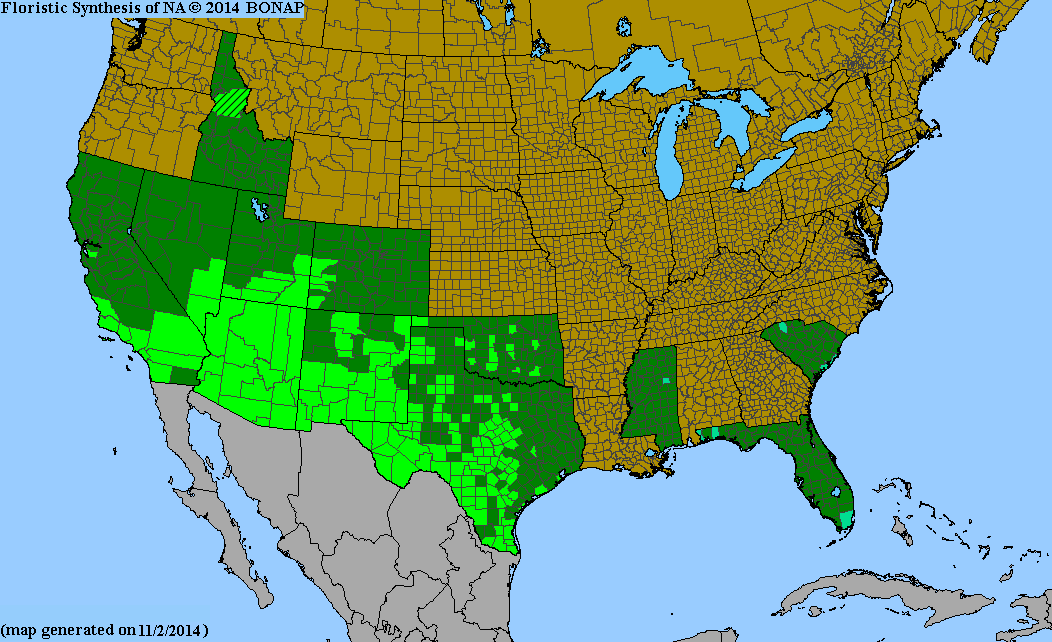 Map Color Key Map Color Key |
Texas Status: Native |
Banner photo of Castilleja indivisa and Lupinus ssp. taken along FM 1323 north of Johnson City, Blanco County
© Tom Lebsack 2026
Every attempt is made to provide accurate, up-to-date, and relevant information, but the completeness or accuracy of any information presented on this website cannot be guaranteed. I use authoritative references to insure high standards of accuracy and review and update the information frequently. Please contact me if you find errors.