Texas Wildbuds
Rhus copallinum var. lanceolata
(Prairie Flameleaf Sumac)
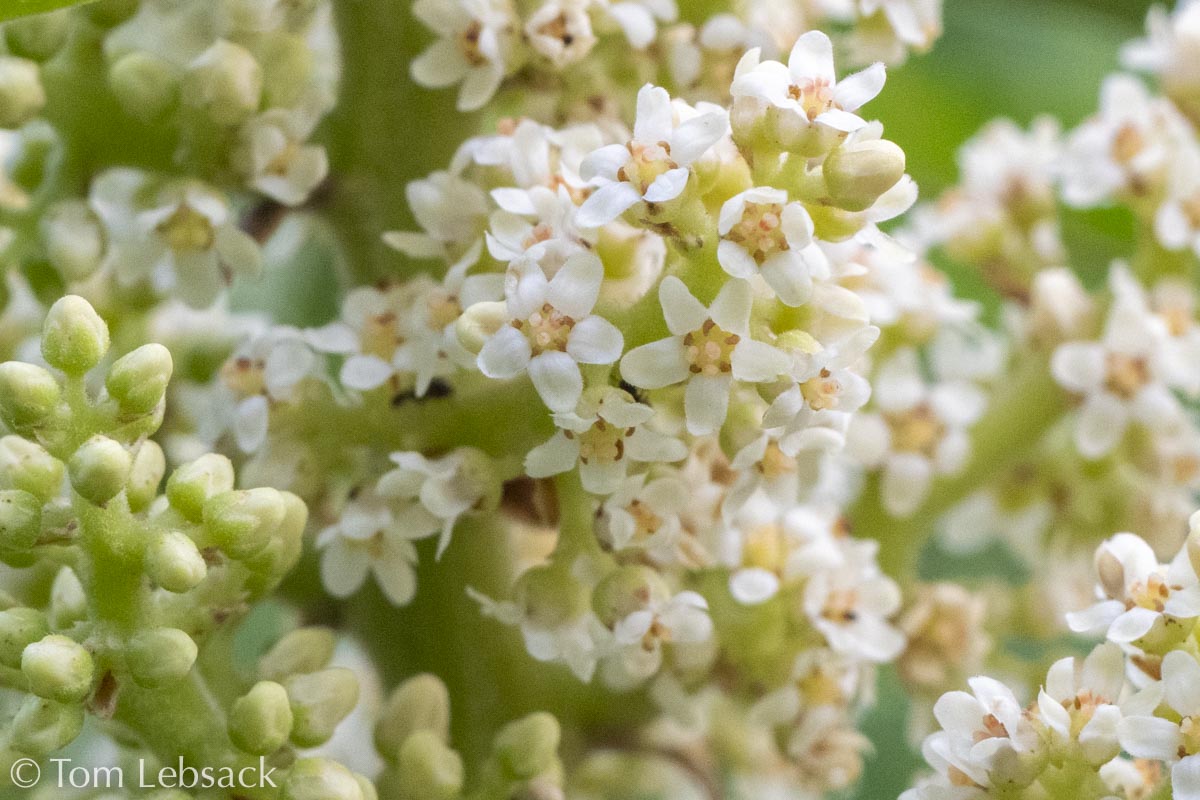
Rhus coppalinum var. lanceolata, Westminster Glen, Austin, Travis Co. 6640

Rhus coppalinum var. lanceolata, Westminster Glen, Austin, Travis Co. 6639
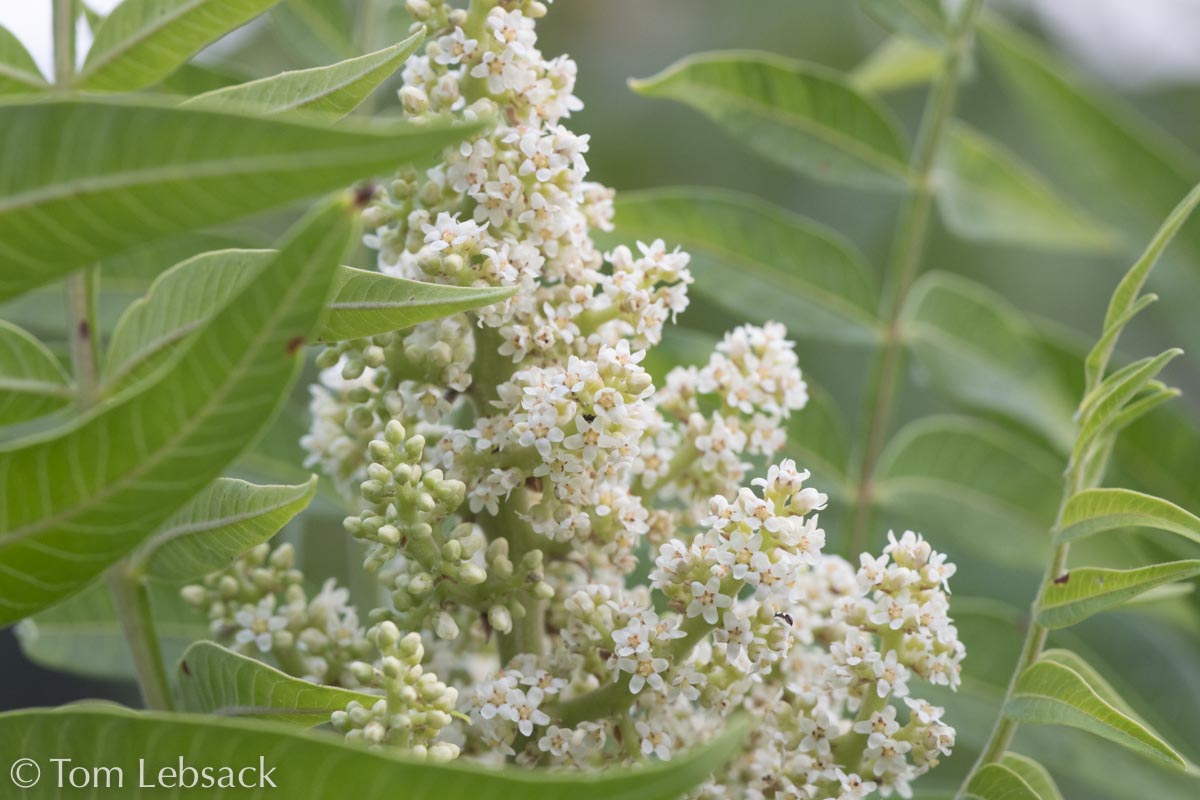
Rhus coppalinum var. lanceolata, Westminster Glen, Austin, Travis Co. 6641
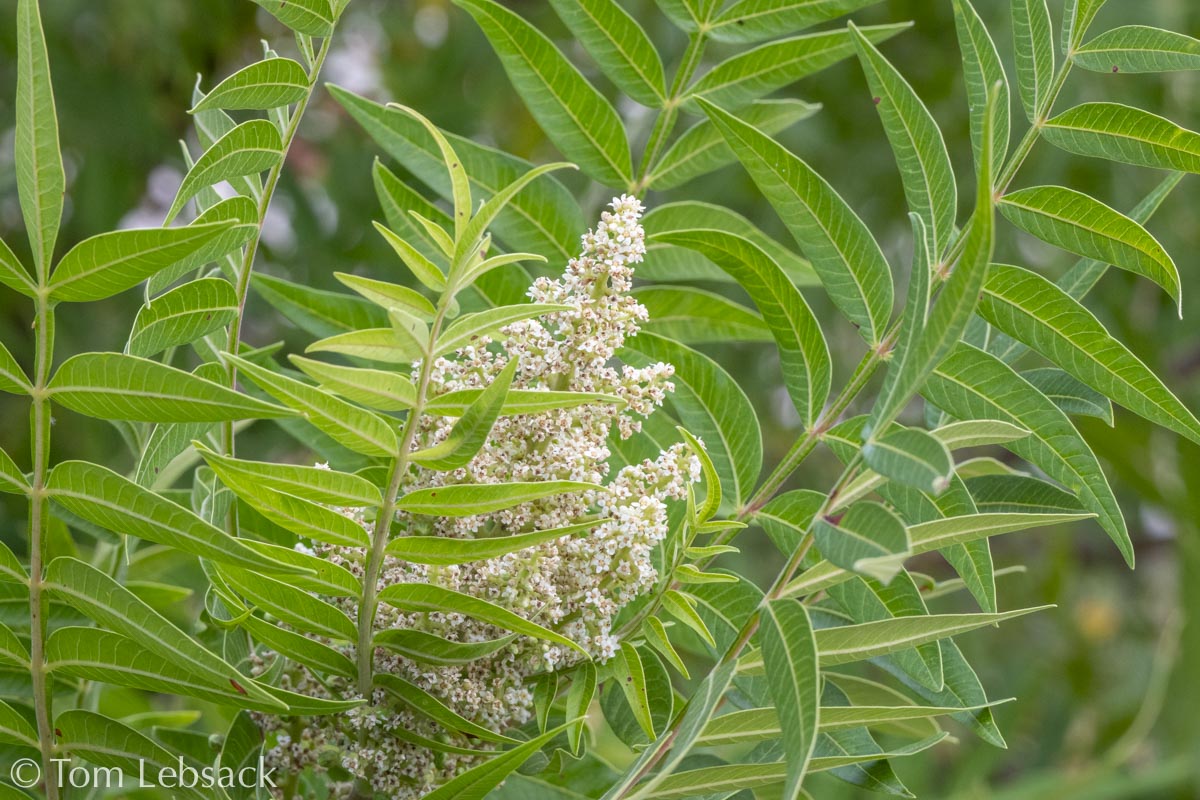
Rhus coppalinum var. lanceolata, Westminster Glen, Austin, Travis Co. 6642
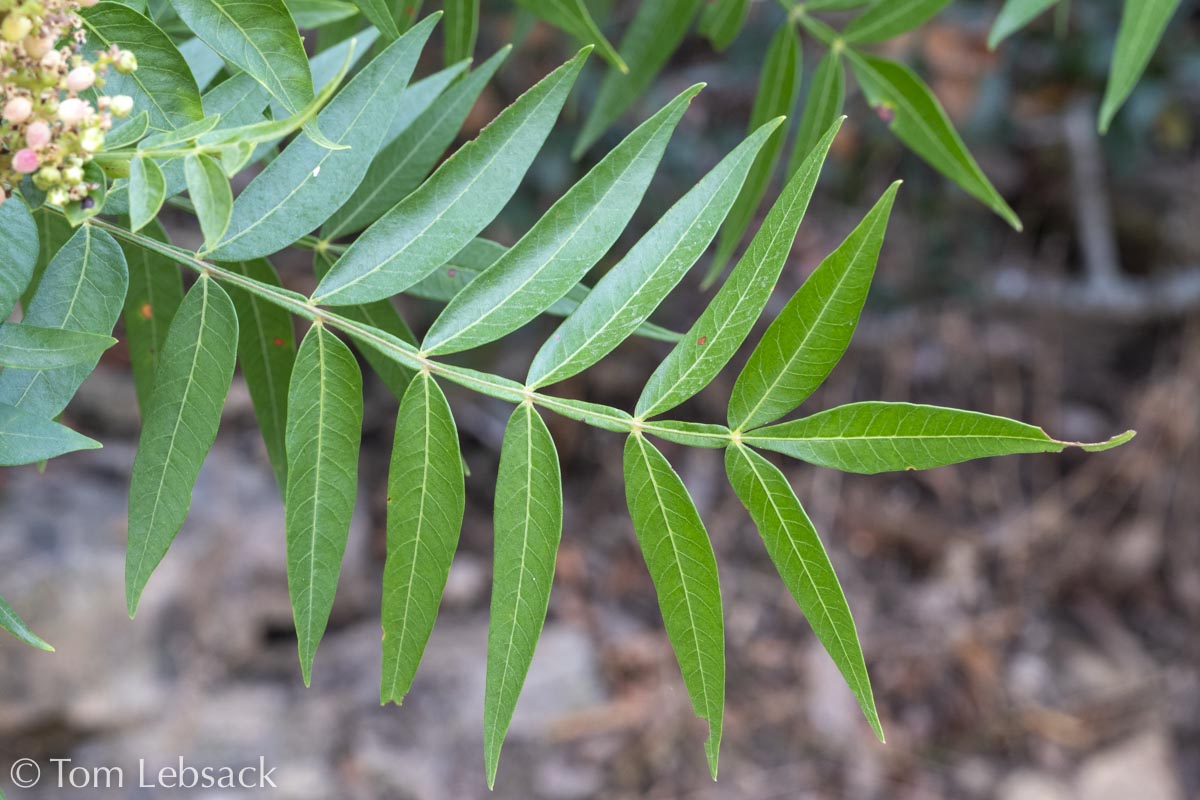
Rhus coppalinum var. lanceolata, Westminster Glen, Austin, Travis Co. 6643
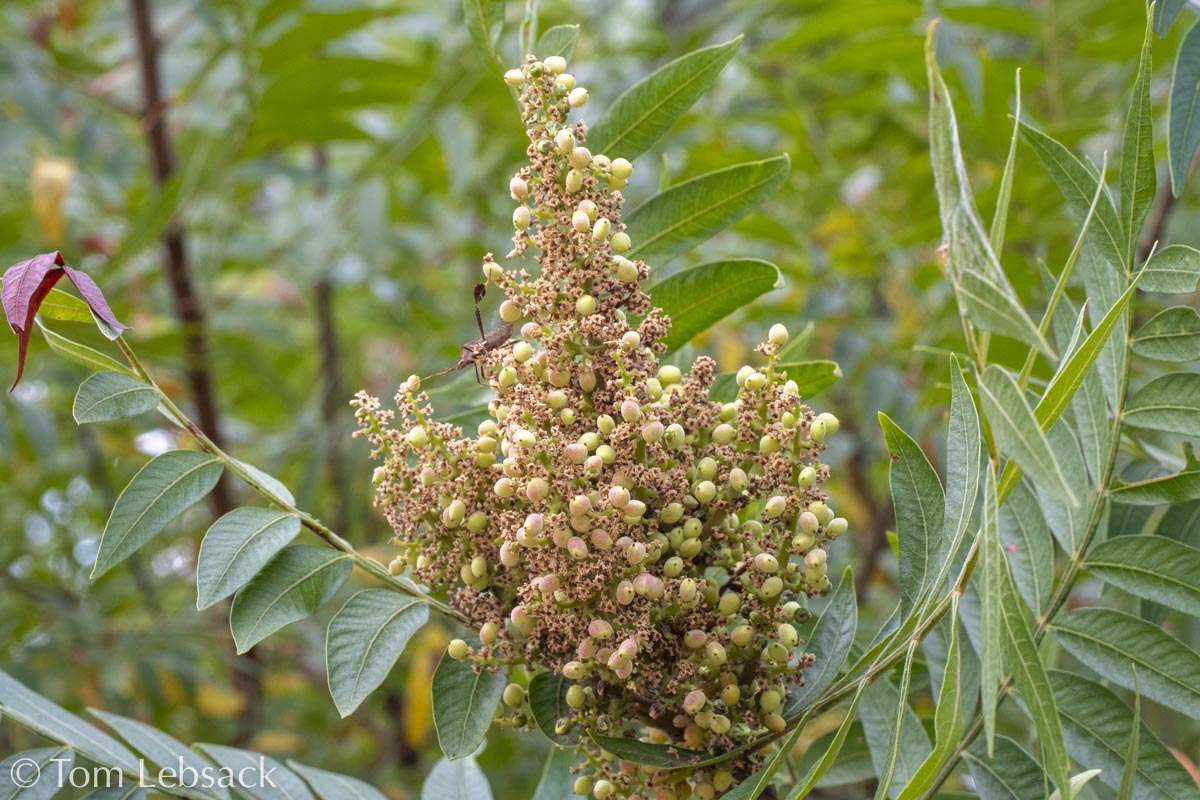
Rhus coppalinum var. lanceolata, Westminster Glen, Austin, Travis Co. 6645
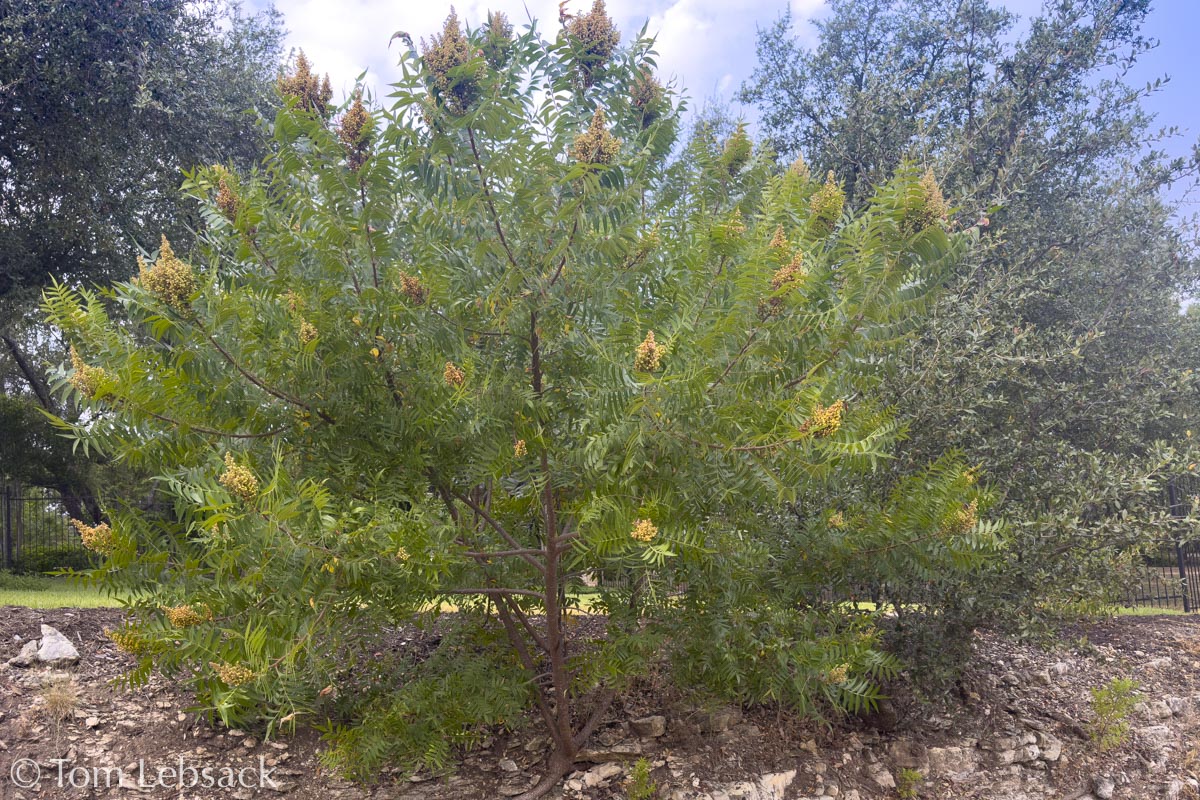
Rhus coppalinum var. lanceolata, Westminster Glen, Austin, Travis Co. 7293
| Scientific Name | Rhus copallinum var. lanceolata (Rhus lanceolata) | USDA PLANTS Symbol | RHLA3 |
| Common Name | Prairie Flameleaf Sumac, Prairie Sumac | ITIS Taxonomic Serial No. | 539588 |
| Family | Anacardiaceae (Sumac) | SEINet Reference |
Click Here |
| Description | Habitat: On limestone and calcareous soils in open woodlands, prairies, riverbanks, savannas, rocky slopes and disturbed areas. Plant: Densely branched deciduous large shrub or tree, single or multiple trunks, up to more than 30 ft. tall; colony-forming; younger stems are purplish-reddish, hairless with lenticels; brown bark with large, thin scales later. Leaves: Odd pinnately-compound leaves, up to 12 inches long, each with 13 to 19 linear-lanceolate, falcate (sickle-shaped), leaflets up to 2-1/8 inches long and 1/2-inch wide; winged rachis (the small stem between the leaflets); upper surface is shiny, dark green, lower is paler; leaflets turning bright red in the fall. Inflorescence: Panicles on branch tips, 4 to 8 inches long with 100 to 300 flowers that are mostly unisexual; each tiny blossom ~1/8-inch across (or less) with 5 white petals; staminate (male) flowers have 5 stamens; pistillate (female) have 3 styles and stigmas; 5 greenish-white sepals about half as long as petals. Bloom Period: Late summer to fall. Fruit: Dark red, ovoid drupes less than 1/4-inch in terminal clusters, covered with short, sticky, red hairs; maturing in fall, present during winter. Reference: R. lanceolata in "Manual of the Vascular Plants of Texas" by Correll and Johnston, SEINet, Vascular Plants of Williamson County by A.C. Gibson and Kansas Wildflowers and Grasses. |
BONAP Distribution Map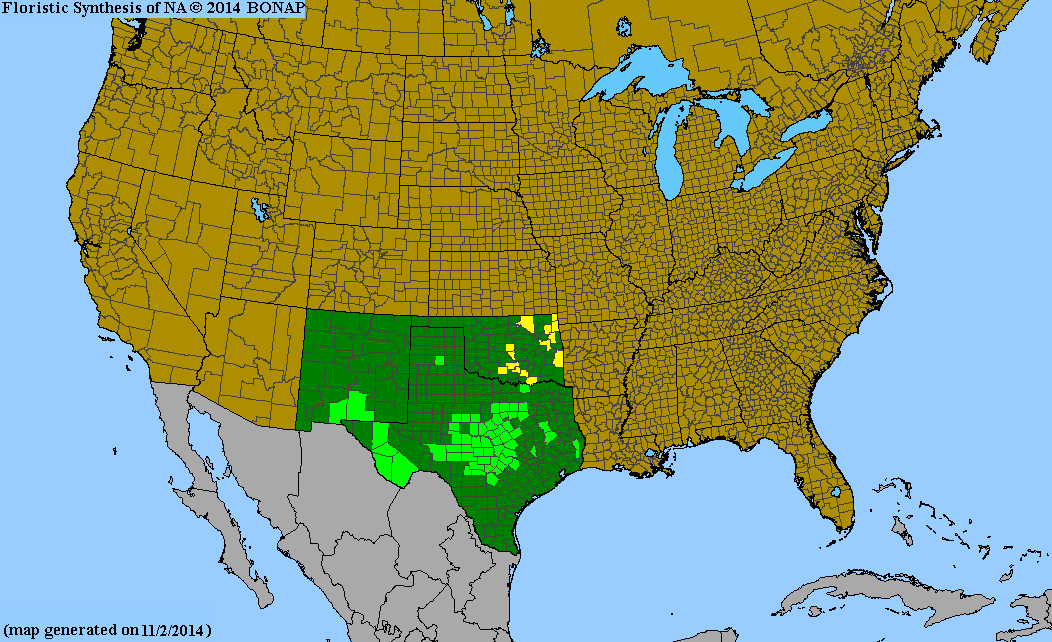 R. lanceolata R. lanceolataMap Color Key |
Texas Status: Native |
Banner photo of Castilleja indivisa and Lupinus ssp. taken along FM 1323 north of Johnson City, Blanco County
© Tom Lebsack 2026
Every attempt is made to provide accurate, up-to-date, and relevant information, but the completeness or accuracy of any information presented on this website cannot be guaranteed. I use authoritative references to insure high standards of accuracy and review and update the information frequently. Please contact me if you find errors.