Texas Wildbuds
Asclepias curassavica
(Bloodflower)
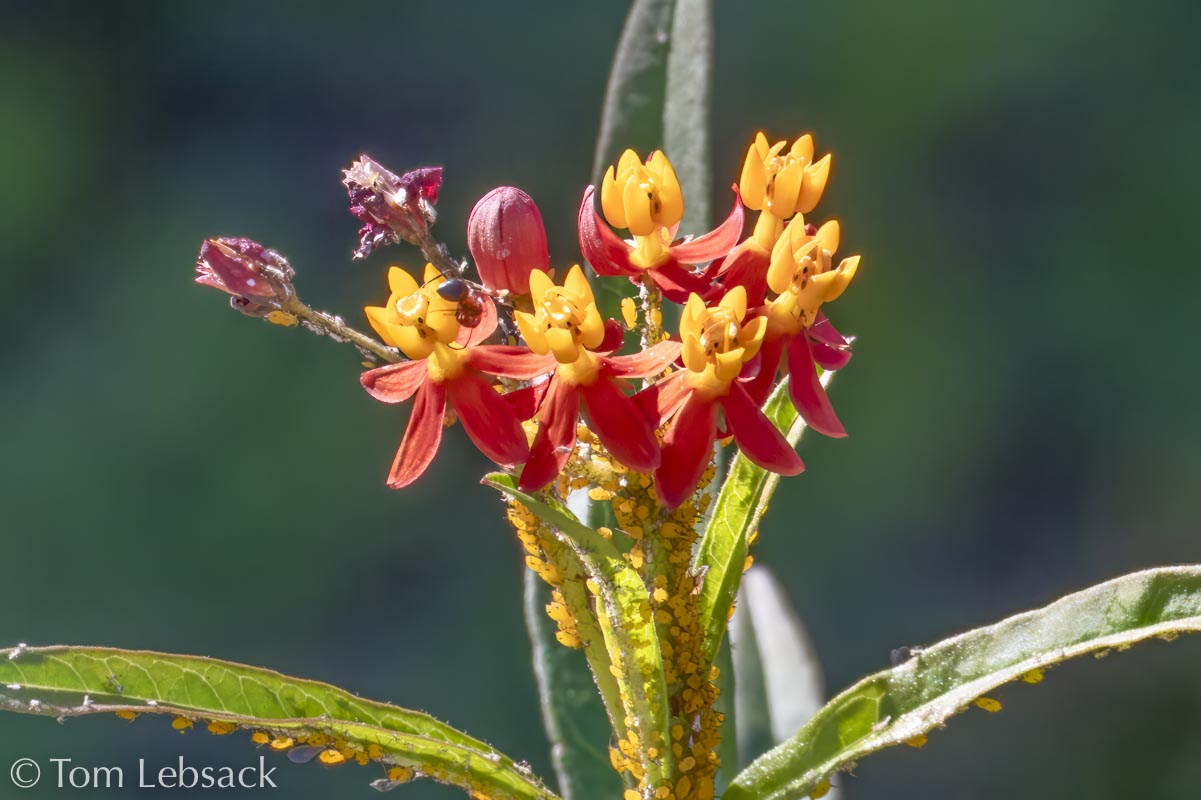
Asclepias curassavica, Packery Channel Park, Mustang Island, Nueces Co. 6852
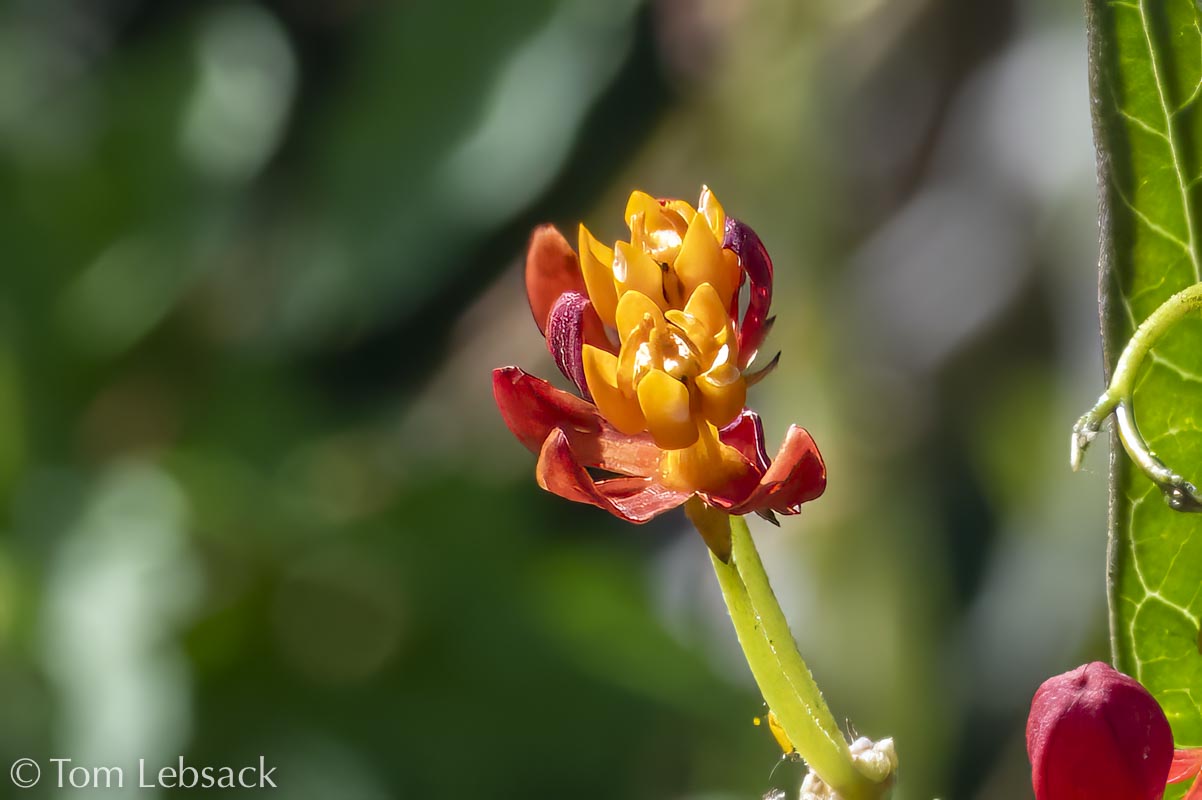
Asclepias curassavica, Packery Channel Park, Mustang Island, Nueces Co. 6855
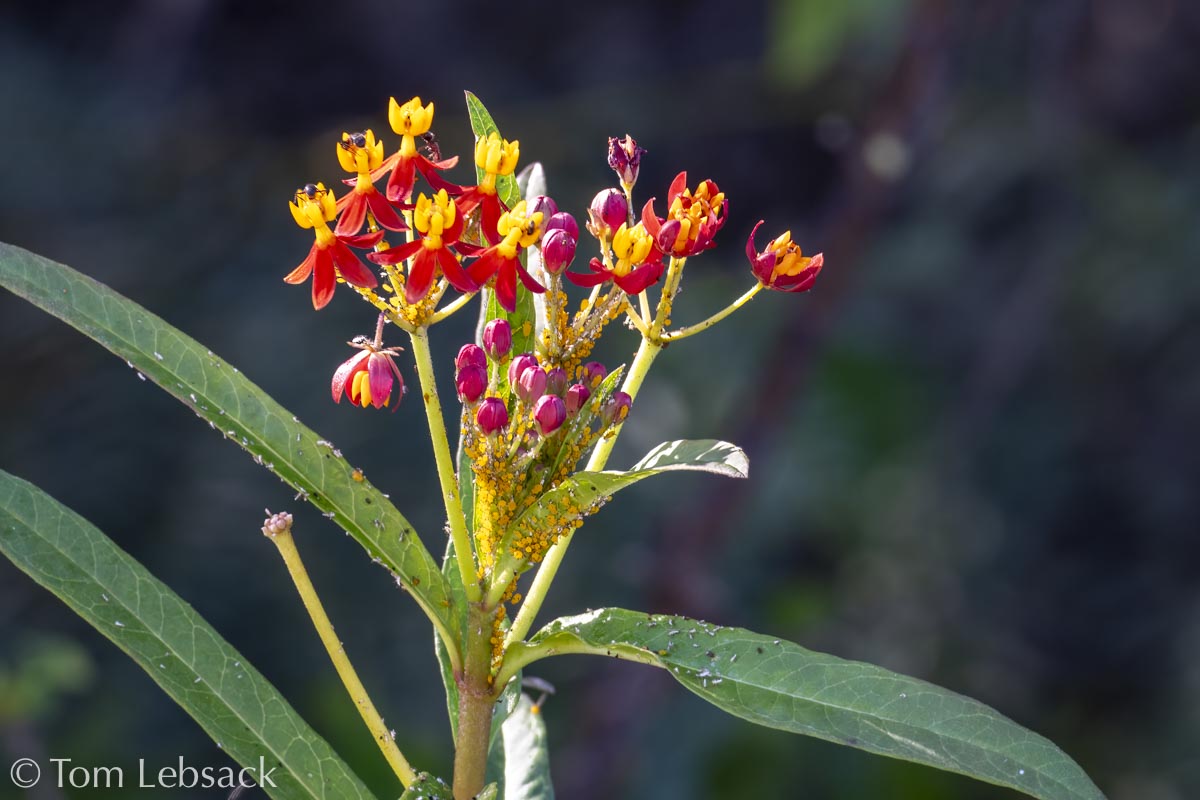
Asclepias curassavica, Packery Channel Park, Mustang Island, Nueces Co. 6839
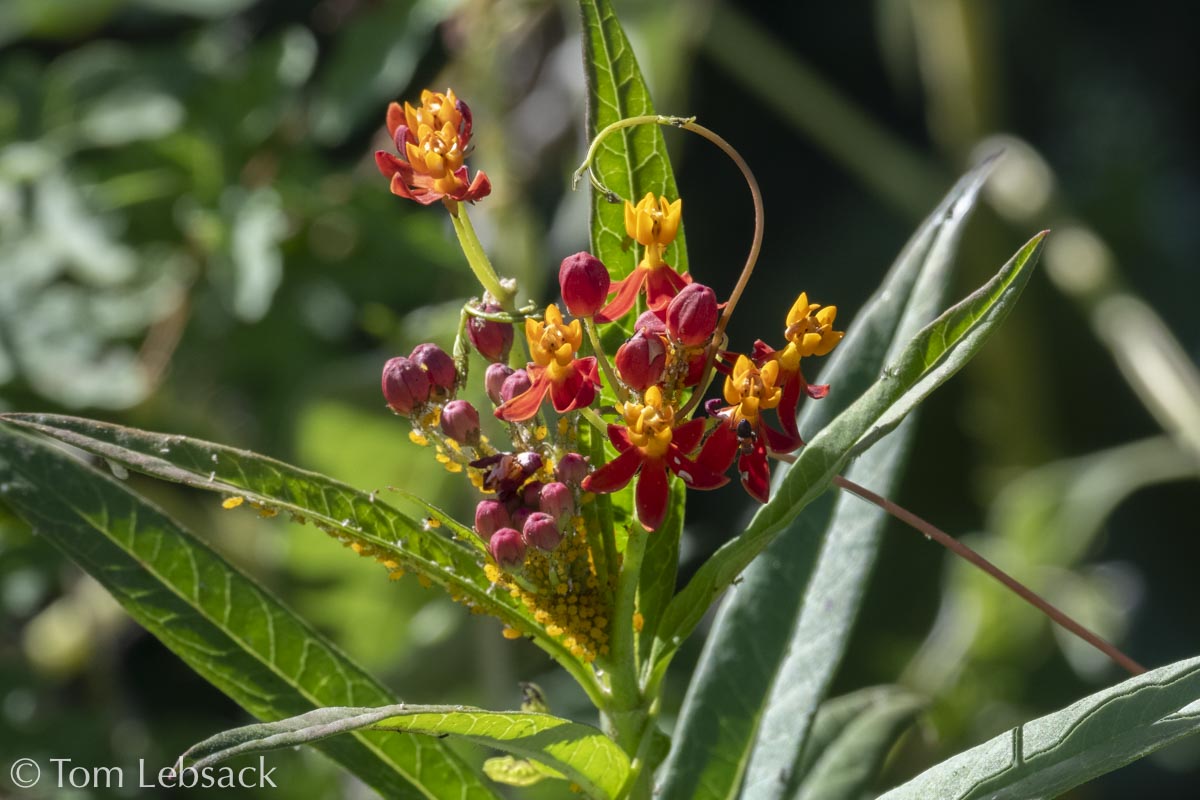
Asclepias curassavica, Packery Channel Park, Mustang Island, Nueces Co. 6857
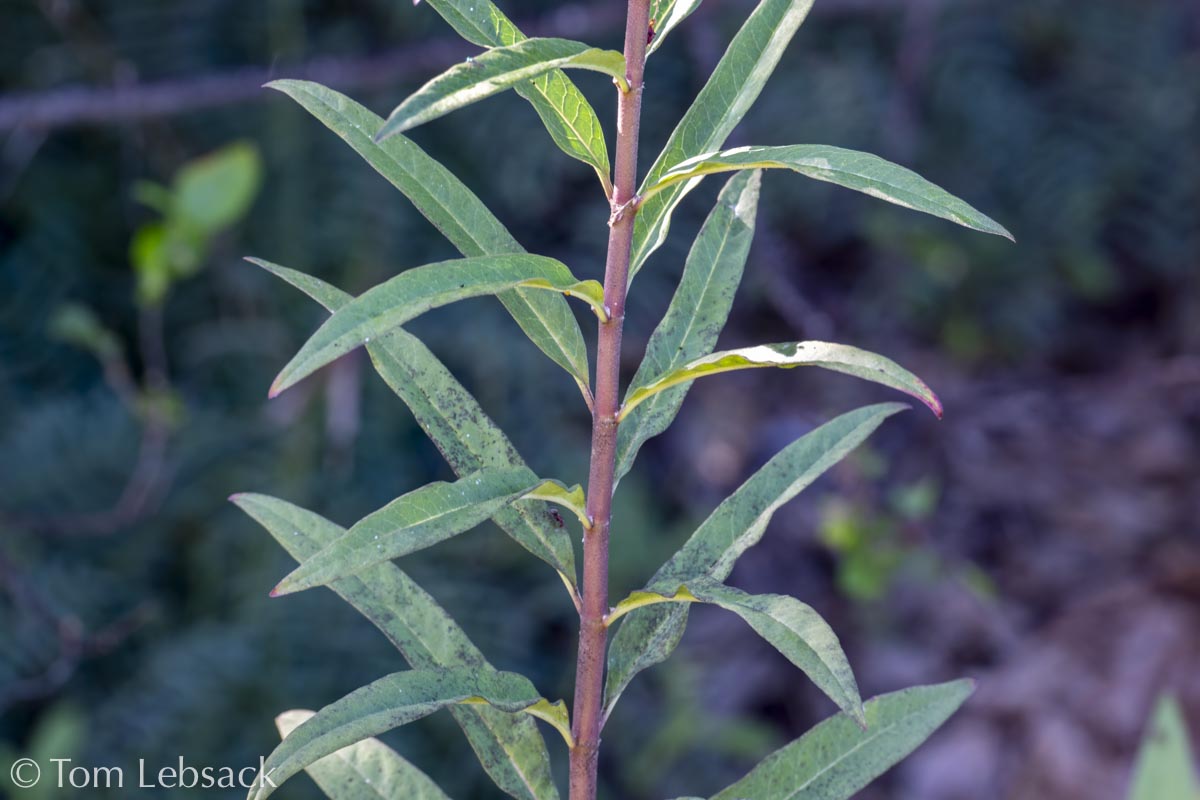
Asclepias curassavica, Packery Channel Park, Mustang Island, Nueces Co. 6840
| Scientific Name | Asclepias curassavica | USDA PLANTS Symbol | ASCU |
| Common Name | Bloodflower, Scarlet Weed | ITIS Taxonomic Serial No. | 30258 |
| Family | Apocynaceae (Dogbane) | SEINet Reference |
Click Here |
| Description | Habitat: Moist or wet, sandy soils in disturbed areas, fields, canal and ditch banks, streamsides, wet prairies, marshes, swamps, coastal dunes. Plant: Annual with multiple erect stems, simple or branched, 12 to 48 inches tall. Leaves: Opposite, elliptic-lanceolate to linear, 2 to 7 inches long and 3/8 to 1-3/4 inches wide, tips acute to acuminate to attenuate; on short petioles 3/8-inch long; surfaces smooth to sparsely covered in pubescent hairs. Inflorescence: Solitary clusters at upper leaf nodes containing several to many showy flowers; corollas have 5 bright crimson lobes initially inwardly bent becoming reflexed, each 3/16 to 3/8-inch long; deep-yellow anther head (gynostegium) protruding from center. Bloom Period: Year-round. References: "Manual of the Vascular Plants of Texas" by Correll and Johnston and Flora of North America. Note: These plants were found at the Packery Channel Park near Corpus Christi and may be cultivars planted to attact butterflies. |
BONAP Distribution Map Map Color Key |
Texas Status: Introduced |
Banner photo of Castilleja indivisa and Lupinus ssp. taken along FM 1323 north of Johnson City, Blanco County
© Tom Lebsack 2026
Every attempt is made to provide accurate, up-to-date, and relevant information, but the completeness or accuracy of any information presented on this website cannot be guaranteed. I use authoritative references to insure high standards of accuracy and review and update the information frequently. Please contact me if you find errors.